How Can You Differentiate Leg Heaviness and Burning Caused by Fatigue from Chronic Venous Disease?
Differentiating leg heaviness and burning sensations is essential, as these symptoms can stem from various causes, including simple fatigue or more serious conditions like chronic venous disease (CVD). Understanding the nuances of onset, duration, and associated signs helps determine when medical evaluation is necessary.
Medically Reviewed by Dra. Isabel Cristina
What Are the Common Causes of Leg Heaviness and Burning Sensations?
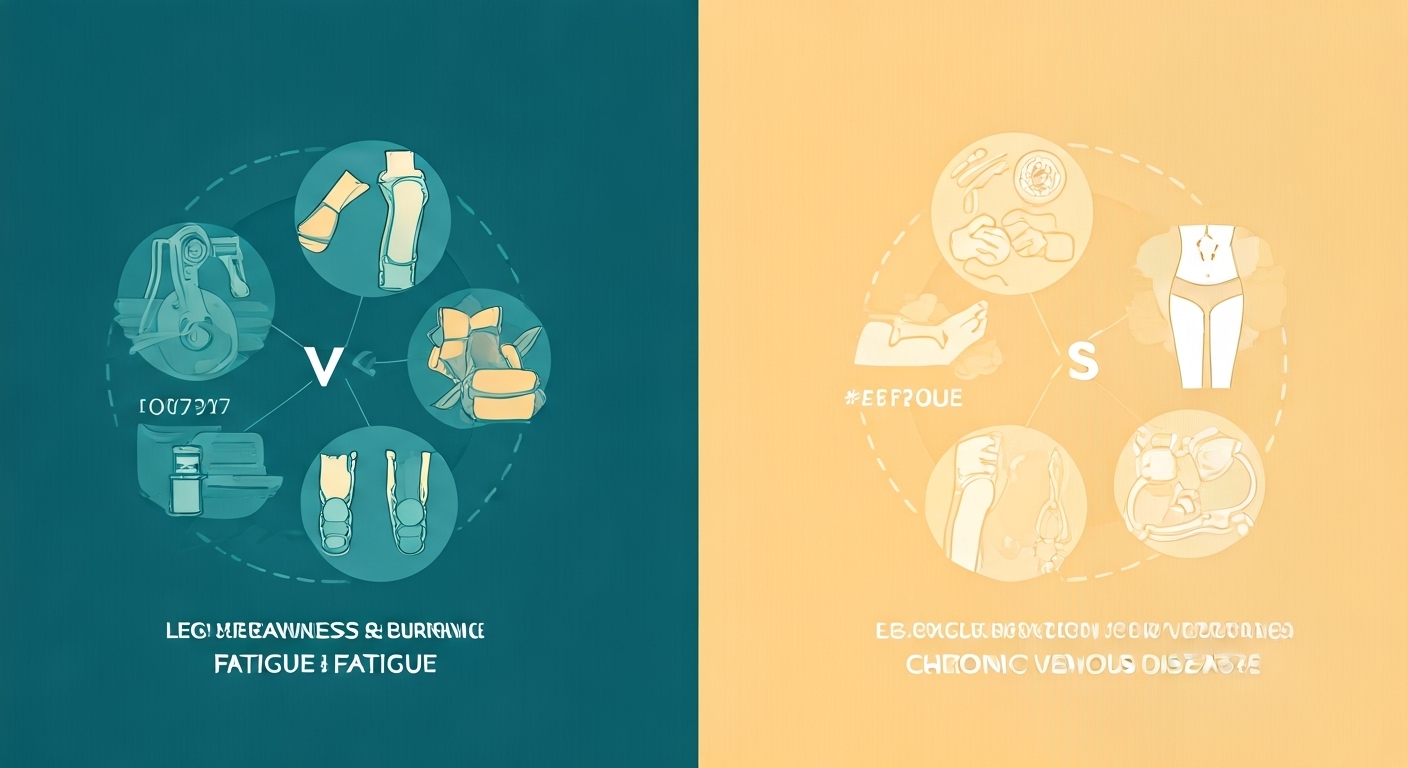
Leg heaviness and burning are common complaints with diverse origins. They can result from muscle fatigue after physical exertion, prolonged standing, dehydration, or even certain neurological conditions. However, persistent or worsening symptoms, especially with swelling or visible veins, often point towards underlying vascular issues.
Many individuals experience a sensation of heaviness or burning in their legs, particularly at the end of a long day. While often attributed to simple muscle fatigue or overexertion, these symptoms can also be indicative of more complex health problems.
Factors contributing to these sensations include:
- Physical Activity: Intense exercise can lead to muscle fatigue and lactic acid buildup.
- Prolonged Standing or Sitting: Reduces blood flow efficiency and increases pressure in leg veins.
- Dehydration: Can cause muscle cramps and discomfort.
- Nutritional Deficiencies: Lack of certain minerals like potassium or magnesium.
- Peripheral Neuropathy: Nerve damage can cause burning, tingling, or numbness.
However, when these symptoms become chronic, progress, or are accompanied by other specific signs, a vascular evaluation is important. Dra. Isabel Cristina at SoulClin focuses on precise diagnosis to distinguish benign causes from significant vascular conditions.
How Do Symptoms of General Fatigue Compare to Chronic Venous Disease?
Symptoms of general fatigue in the legs typically resolve with rest and elevation, lacking specific physical signs of vascular disease. In contrast, chronic venous disease (CVD) presents with persistent heaviness, burning, and often noticeable physical changes like varicose veins, swelling, or skin discoloration, which tend to worsen throughout the day.
Understanding the distinct characteristics of leg symptoms is key to identifying their origin. While both fatigue and chronic venous disease (CVD) can cause discomfort, their presentation and progression differ significantly. The table below outlines these key distinctions to help patients recognize potential underlying issues.
| Feature | Fatigue-Related Heaviness/Burning | Chronic Venous Disease (CVD) | |---------------------|-----------------------------------|------------------------------| | Onset | After physical exertion or prolonged activity | Often gradual, worsens over months/years | | Relief | Improves significantly with rest, leg elevation, and hydration | Partial, temporary relief with elevation; symptoms recur | | Associated Symptoms | General tiredness, muscle soreness, cramps (often bilateral) | Swelling (edema), visible varicose veins or spider veins, itching, restless legs, skin changes | | Timing | Worsens towards end of day or after specific activity | Worsens throughout the day, especially with prolonged standing; may improve overnight | | Location | Diffuse, often bilateral; can be localized to specific muscle groups | Often starts unilaterally, follows vein paths; can become bilateral | | Physical Signs | No specific visible signs on the skin or veins | Varicose veins (C2), edema (C3), pigmentation (C4a), skin hardening (C4b), ulcers (C5/C6) | | Underlying Cause| Overexertion, lack of rest, dehydration, muscle strain | Venous valve incompetence, venous reflux, venous hypertension |
At SoulClin in Belo Horizonte, Dra. Isabel Cristina emphasizes a thorough clinical history and physical examination, which are crucial steps in differentiating these conditions.
What Are the Specific Signs and Stages of Chronic Venous Insufficiency?
Chronic venous insufficiency (CVI) is characterized by incompetent venous valves, leading to blood pooling and increased pressure in leg veins. Specific signs include visible varicose veins, leg swelling, and skin changes. The CEAP classification system categorizes CVI progression from no visible signs to active venous ulcers, guiding diagnosis and treatment.
Chronic venous insufficiency (CVI) is a progressive condition where leg veins struggle to return blood to the heart effectively. This leads to increased pressure in the veins, known as venous hypertension, and can cause a range of symptoms and visible signs. According to international standards, the CEAP classification system helps define the severity of CVI, from initial cosmetic concerns to severe complications.
CEAP Classification System:
- C0: No visible or palpable signs of venous disease.
- C1: Presence of telangiectasias (spider veins) or reticular veins.
- C2: Varicose veins, which are enlarged, twisted veins.
- C3: Edema, or swelling, in the legs.
- C4a: Skin changes such as pigmentation (darkening) or eczema.
- C4b: More severe skin changes like lipodermatosclerosis (skin hardening) or atrophie blanche.
- C5: Healed venous ulcer.
- C6: Active venous ulcer.
These stages highlight the importance of early diagnosis and intervention. Dra. Isabel Cristina focuses on prevention and precise diagnosis, ensuring patients receive care tailored to their specific stage of venous disease.
When Should You Seek Medical Evaluation for Leg Symptoms?
You should seek medical evaluation for leg symptoms if they are persistent, worsening, or accompanied by specific signs like visible varicose veins, swelling, skin changes, or pain that interferes with daily life. A vascular specialist, like Dra. Isabel Cristina, can accurately diagnose the cause and recommend appropriate care.
It can be challenging to know when leg discomfort warrants a medical visit. While occasional leg heaviness after a busy day is often benign, certain red flags indicate the need for professional assessment. Dra. Isabel Cristina advises patients to consider a consultation if they experience:
- Persistent Symptoms: Heaviness, burning, or aching that does not improve with rest or elevation.
- Visible Changes: New or worsening varicose veins, spider veins, or skin discoloration.
- Swelling: Especially if it is unilateral or worsens throughout the day.
- Pain: That is severe, interferes with sleep, or limits mobility.
- Skin Issues: Such as itching, dryness, or the development of wounds or ulcers.
Early diagnosis of chronic venous disease can prevent progression and more severe complications. A specialist can perform a detailed examination and diagnostic tests, such as a vascular ultrasound, to confirm the diagnosis.
What Diagnostic Methods Confirm Chronic Venous Disease?
Confirming chronic venous disease primarily involves a thorough physical examination and a specialized vascular ultrasound, known as a duplex scan. This non-invasive imaging technique allows the specialist to visualize blood flow, assess valve function, and identify any reflux or blockages within the leg veins, providing a precise diagnosis.
Accurate diagnosis is the foundation of effective treatment for chronic venous disease. At SoulClin, Dra. Isabel Cristina utilizes advanced diagnostic tools to ensure a precise understanding of each patient's vascular health.
Key Diagnostic Methods:
- Clinical Examination: A detailed assessment of symptoms, medical history, and a physical check for visible signs like varicose veins, edema, and skin changes.
- Vascular Duplex Ultrasound (Duplex Scan): This is the gold standard for diagnosing CVI. It is a non-invasive test that uses sound waves to create images of blood vessels and measure blood flow. It can detect:
- Venous Reflux: Incompetent valves allowing blood to flow backward.
- Obstruction: Any blockages in the veins.
- Anatomy: Mapping the venous system to identify affected veins.
This precise diagnostic approach enables Dra. Isabel Cristina to develop personalized treatment plans, focusing on minimally invasive techniques that align with her care philosophy.
What Treatment Options Are Available for Chronic Venous Insufficiency?
Treatment for chronic venous insufficiency ranges from conservative management to minimally invasive procedures and surgery, depending on the severity. Options include compression therapy, sclerotherapy for smaller veins, and endovenous thermal ablation for larger saphenous veins, aiming to alleviate symptoms and prevent disease progression.
Once chronic venous insufficiency is diagnosed, a range of treatment options are available, tailored to the individual's condition and lifestyle. Dra. Isabel Cristina specializes in modern, minimally invasive approaches, prioritizing patient comfort and effective outcomes.
Treatment Modalities for CVI:
-
Conservative Management:
- Compression Therapy: Graduated compression stockings help improve blood flow and reduce swelling.
- Leg Elevation: Elevating legs above heart level several times a day.
- Regular Exercise: Walking and other activities that promote calf muscle pump function.
- Skin Care: To manage dryness or inflammation.
-
Sclerotherapy (Escleroterapia):
- Involves injecting a sclerosant agent into affected veins (spider veins, reticular veins, or varicose veins) to close them. Foam sclerotherapy is highly effective for various vein sizes.
-
Endovenous Thermal Ablation:
- Procedures like Endovenous Laser Ablation (EVLA) or Radiofrequency Ablation (RFA) use heat to close incompetent saphenous veins. These are highly effective with occlusion rates above 95% at 5 years, as per ESC 2022 guidelines.
-
Phlebectomy: A minimally invasive surgical removal of varicose veins through tiny incisions.
Dra. Isabel Cristina's approach at SoulClin combines precise diagnosis with a focus on treatments that promote vascular health with lightness and confidence, respecting each patient's unique journey.
Common Questions
Can dehydration cause leg heaviness and burning?
Yes, dehydration can contribute to leg heaviness and burning sensations. When the body lacks sufficient fluids, it can lead to muscle cramps and fatigue, mimicking symptoms of other conditions. Ensuring adequate hydration is a simple yet important step in managing general leg discomfort and supporting overall vascular health.
Are restless legs syndrome and chronic venous disease related?
Restless legs syndrome (RLS) and chronic venous disease (CVD) can sometimes present with similar sensations, and there is evidence suggesting a link. Treating underlying CVD may improve RLS symptoms in some individuals. A vascular specialist can evaluate if your restless legs are connected to venous insufficiency.
How does leg elevation help with leg heaviness?
Elevating the legs above heart level helps reduce leg heaviness by promoting venous return and decreasing pressure in the leg veins. This simple maneuver assists gravity in moving pooled blood back towards the heart, temporarily alleviating swelling and discomfort associated with venous insufficiency or prolonged standing.
Can varicose veins cause a burning sensation?
Yes, varicose veins can absolutely cause a burning sensation in the legs. This symptom often arises from inflammation around the affected veins and increased pressure within them, irritating surrounding tissues and nerves. The burning may worsen with prolonged standing or at the end of the day.
Is chronic venous disease more common in women?
Chronic venous disease (CVD) is indeed more prevalent in women, affecting approximately 25-40% of women compared to 10-20% of men globally. Hormonal factors, pregnancy, and certain lifestyle choices contribute to this higher incidence. Dra. Isabel Cristina has a special focus on women's vascular health.
What is the CEAP classification system?
The CEAP classification system is an international standard used by vascular specialists to categorize chronic venous disorders based on clinical signs, etiology, anatomy, and pathophysiology. It helps in precisely staging the disease, from no visible signs to active venous ulcers, guiding accurate diagnosis and appropriate treatment strategies for patients.