How Does AI-Assisted Diagnosis Compare to Traditional Methods in Vascular Care?
AI-assisted diagnosis enhances the precision and efficiency of vascular care, complementing traditional methods. At SoulClin in Belo Horizonte, Dra. Isabel Cristina focuses on integrating advanced tools to achieve accurate diagnoses. This comparison explores how artificial intelligence supports the meticulous evaluation essential for effective vascular health management, ensuring patient-centered care.
Medically Reviewed by Dra. Isabel Cristina
What is AI-Assisted Diagnosis in Vascular Medicine?
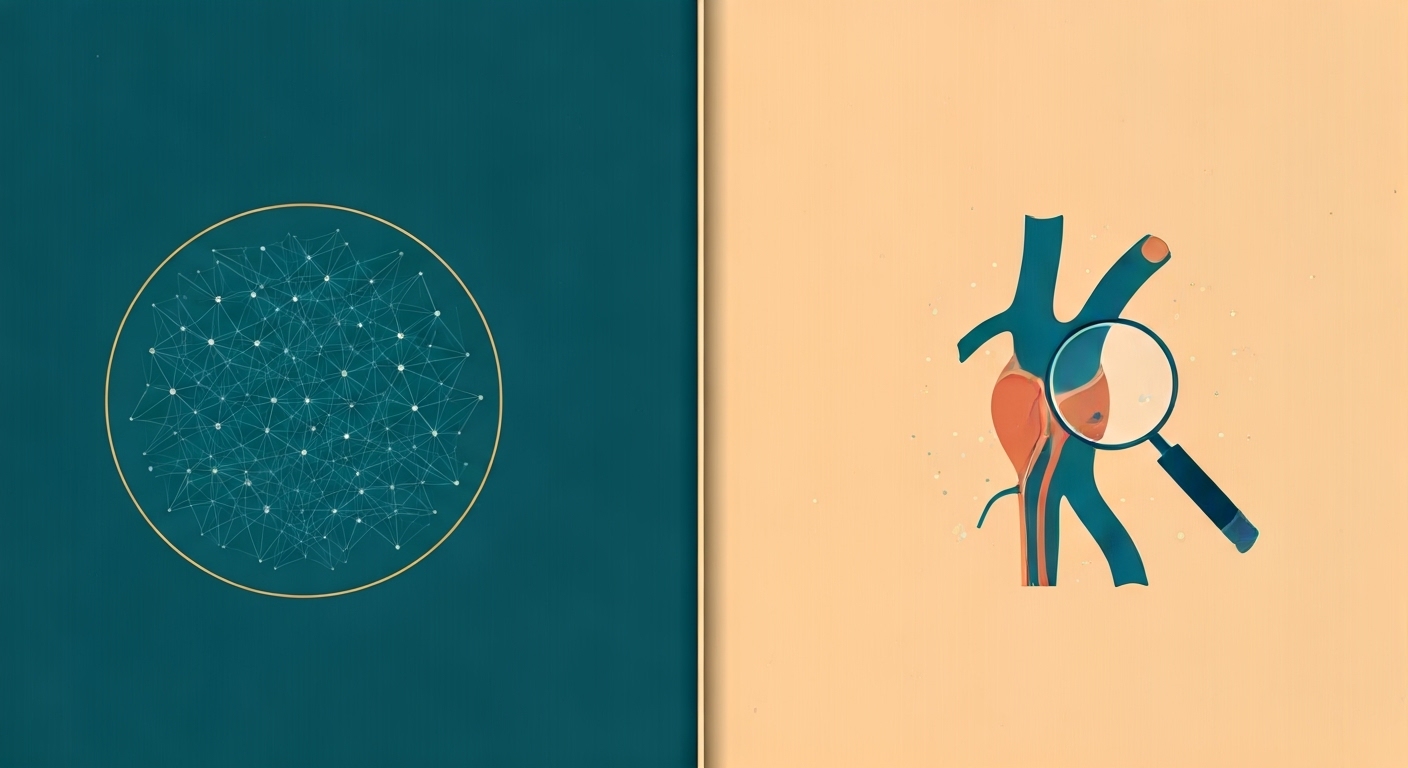
AI-assisted diagnosis in vascular medicine involves using artificial intelligence algorithms to analyze medical images and patient data. These systems help identify patterns, anomalies, and risk factors that might be subtle or difficult for the human eye to detect. This technology supports vascular specialists in making more informed and precise diagnostic decisions.
Artificial intelligence (AI) is transforming various medical fields, including vascular care. In diagnostics, AI algorithms can process vast amounts of data from sources like Doppler ultrasound, CT scans, and MRI. They are trained to recognize specific markers associated with vascular conditions.
This intelligent analysis aids in detecting issues such as deep vein thrombosis, peripheral artery disease, and chronic venous insufficiency. The goal is to provide a comprehensive view that enhances the diagnostic capabilities of the vascular specialist. This approach aligns with Dra. Isabel Cristina's commitment to precise diagnosis at SoulClin.
How Do Traditional Diagnostic Methods Work in Vascular Health?
Traditional diagnostic methods in vascular health rely on a physician's expertise, patient history, physical examination, and direct interpretation of imaging studies. A vascular specialist assesses symptoms, performs clinical tests, and personally reviews ultrasound images to identify conditions. This approach emphasizes human judgment, experience, and direct patient interaction for diagnosis.
For decades, vascular diagnosis has been a cornerstone of medical practice, built on the profound knowledge and experience of specialists. A typical diagnostic process begins with a detailed patient history, where the physician learns about symptoms, lifestyle, and medical background. A thorough physical examination follows, checking for visible signs of vascular issues.
Imaging studies, particularly Doppler ultrasound, are then performed and interpreted by the vascular specialist. The human eye and brain are adept at recognizing complex patterns and nuances in these images, integrating them with clinical findings. This holistic, patient-centered evaluation is fundamental to Dra. Isabel Cristina's care philosophy at SoulClin, ensuring a deep understanding of each patient's unique vascular health journey.
What are the Key Differences Between AI-Assisted and Traditional Vascular Diagnosis?
The primary differences lie in processing power, pattern recognition, and the role of human intuition. AI excels at analyzing large datasets rapidly and consistently identifying subtle patterns. Traditional methods, conversely, depend on a physician's deep experience and clinical judgment. Both approaches aim for accurate diagnosis, with AI serving as a powerful complementary tool.
Understanding the distinctions between these two diagnostic paradigms is crucial for appreciating the future of vascular care. While traditional methods are invaluable for their human touch and contextual understanding, AI introduces new dimensions of analysis. The following table highlights key comparative aspects:
| Feature | Traditional Vascular Diagnosis | AI-Assisted Vascular Diagnosis | | :------------------ | :------------------------------------------------------ | :------------------------------------------------------------ | | Data Analysis | Physician interprets images and clinical data | Algorithms analyze images and data for patterns | | Speed | Dependent on physician's time and cognitive load | Rapid processing of large datasets | | Consistency | Can vary based on individual physician experience | High consistency in pattern recognition | | Objectivity | Informed by clinical experience and human judgment | Data-driven, reducing potential for subjective bias | | Subtle Patterns | Requires significant experience to detect | Can identify minute, complex patterns not obvious to humans | | Physician Role | Central to all interpretation and decision-making | Tool for augmenting physician's diagnostic capabilities | | Cost | Primarily labor and equipment | Software, hardware, and integration costs |
Dra. Isabel Cristina emphasizes that AI is not a replacement but a valuable enhancement. It supports her focus on precise diagnosis, allowing for more time dedicated to patient interaction and personalized treatment planning at SoulClin.
Can AI Improve the Accuracy of Vascular Disease Detection?
Yes, AI can significantly improve the accuracy of vascular disease detection by identifying subtle indicators that might escape human observation. Algorithms can process vast datasets from imaging with remarkable speed and consistency, leading to earlier and more precise identification of conditions. This enhanced accuracy supports better treatment planning and patient outcomes.
The potential for AI to boost diagnostic accuracy is a major advantage. AI systems, particularly those using deep learning, can be trained on millions of medical images, allowing them to learn and recognize minute patterns indicative of disease. This capability is especially beneficial in complex cases or for early-stage detection, where subtle changes are critical.
For instance, AI can assist in the automated detection of atherosclerotic plaques or the precise measurement of vessel diameters, reducing inter-observer variability. Studies suggest AI tools can achieve diagnostic performance comparable to, or even exceeding, human experts in specific tasks. This collaborative approach, where AI provides detailed analysis and the physician offers clinical correlation, creates a robust diagnostic framework. This commitment to advanced, precise diagnostics is central to the patient care offered by Dra. Isabel Cristina at SoulClin. (Jiang et al., 2020).
What Role Does the Vascular Specialist Play in AI-Enhanced Diagnostics?
The vascular specialist's role remains central and indispensable in AI-enhanced diagnostics. AI functions as an advanced assistant, providing data-driven insights. The physician, like Dra. Isabel Cristina, integrates these insights with clinical context, patient history, and physical examination findings. This ensures a holistic, empathetic, and personalized diagnostic process, maintaining human oversight.
Even with advanced AI tools, the expertise and judgment of a vascular specialist are paramount. AI does not diagnose; it analyzes and presents information. The physician's role involves:
- Clinical Correlation: Integrating AI findings with the patient's overall health picture and symptoms.
- Contextual Understanding: Interpreting AI outputs within the nuances of an individual patient's medical history and lifestyle.
- Decision-Making: Formulating the final diagnosis and treatment plan, which requires empathy, experience, and ethical consideration.
- Patient Communication: Explaining complex findings in a clear, reassuring manner, a core aspect of Dra. Isabel Cristina's approach to patient care.
At SoulClin, Dra. Isabel Cristina ensures that technology serves to elevate the human experience in medicine. AI tools augment her ability to provide precise diagnoses, allowing more focused interaction and personalized care, upholding her philosophy of welcoming and respectful patient interactions. Based on more than 15,000 procedures performed, this blend of technology and human expertise proves invaluable.
Common Questions
Is AI-assisted diagnosis always more accurate than a human doctor?
Not necessarily. AI excels at pattern recognition and data processing, which can enhance accuracy by identifying subtle details. However, a human doctor integrates these findings with clinical context, patient history, and empathy, which AI cannot replicate. AI is a powerful tool designed to assist, not replace, the experienced judgment of a vascular specialist like Dra. Isabel Cristina.
Can AI diagnose my vascular condition directly?
No, AI tools are designed to assist clinical reasoning — they do not diagnose, prescribe, or replace the judgment of a licensed physician. Always validate AI outputs against current clinical guidelines and professional training. Your vascular specialist, Dra. Isabel Cristina, makes the final diagnosis based on comprehensive evaluation.
Does AI replace the need for a consultation with a vascular specialist?
Absolutely not. AI enhances the diagnostic process by providing additional insights, but it does not replace the crucial interaction with a vascular specialist. A personal consultation with Dra. Isabel Cristina at SoulClin allows for a comprehensive assessment, discussion of symptoms, and a tailored treatment plan, all of which are beyond AI's capabilities.
How does AI specifically help in diagnosing varicose veins?
AI can analyze ultrasound images of veins to detect subtle reflux, measure vessel diameters with high precision, and identify patterns indicative of varicose vein severity. This can assist in earlier detection and more accurate mapping of affected veins. This detailed analysis supports Dra. Isabel Cristina in planning precise, minimally invasive treatments.
Is my data safe when AI is used in my diagnosis?
Data privacy and security are paramount. When AI tools are integrated into clinical practice, strict protocols are followed to protect patient information, adhering to regulations like LGPD. At SoulClin, Dra. Isabel Cristina ensures all technologies comply with the highest standards for data protection and patient confidentiality.
What are the limitations of AI in vascular diagnosis?
AI's limitations include a lack of contextual understanding beyond the data it's trained on, potential for bias if training data is unrepresentative, and the inability to interact empathetically with patients. It cannot perform a physical exam or understand a patient's emotional state. Human clinical judgment remains essential for nuanced and compassionate care.